
Context
PDAF (Prafulla Dahanukar Art Foundation) distributes roughly 7 lakhs in annual grants to emerging artists across India. The program administration of this massive nationwide program fell completely on one coordinator using a basic portal, resulting in duplicate entries, incomplete payments, and grueling manually verifying applicant identities and tracking physical jury evaluation sheets. Furthermore, many rural applicants lacked computers, relied on cyber cafes, and struggled to articulate their artwork descriptions in English.
Crucially, the applicant pool faced serious usability barriers; many rural artists lacked personal computers or high digital literacy, forcing them to travel to local cyber cafes or seek third-party assistance to navigate lengthy forms, while English language barriers frequently prevented non-native speakers from clearly articulating their artwork descriptions. The foundation urgently required a streamlined, accessible administrative platform architecture to capture upcoming grant cycle entries without collapsing under operational friction.
Requirement
I got in talks to propose a platform redesign and technical workflow strategy ahead of a presentation with the trustees of the organization.
Discussions with the program coordinator lead to a need for discovering the existing administrative pain points, conducting accelerated user research to map out a frictionless user journey for artists, building a functional backend proof of concept to eliminate manual data handling, and delivering a high-fidelity interactive prototype.
Solution
To provide an immediate proof of concept during the pitch, I built a Google Apps Script that automated their most tedious bottleneck, jury sheet creation process: it automatically parsed incoming applicant data fields and instantly generated clean, formatted, and ready-to-use grading sheets for the art jury, proving that manual data entry could be entirely eliminated. I thoroughly researched the user base and white-boarded a highly simplified, language-accessible application flow.
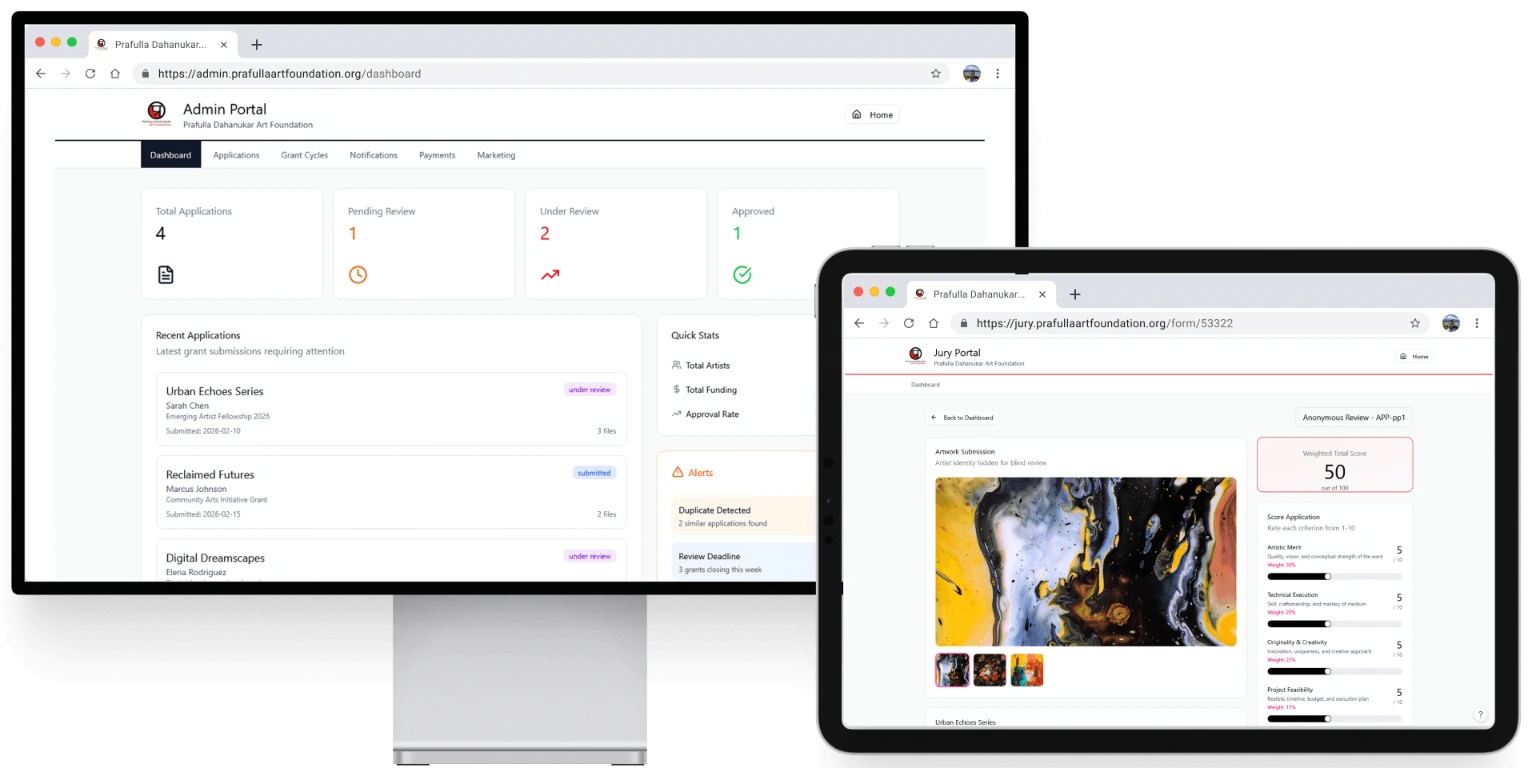
To meet a highly aggressive presentation deadline, a rapid generative design process was executed inside Figma Make. Rather than manually building every button, input field, and menu layout over the course of a week, the finalized whiteboard wireframes were used as visual prompts for AI-assisted UI generation. By translating structural whiteboard sketches into high-fidelity component layouts using just three targeted prompts, a comprehensive, polished user interface prototype was delivered in less than 24 hours.
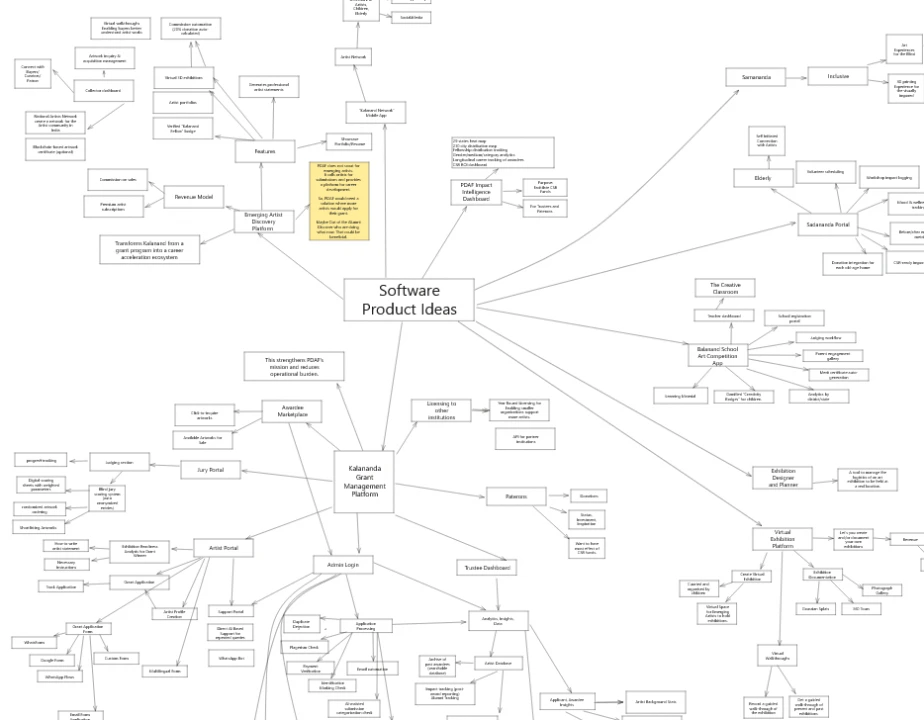
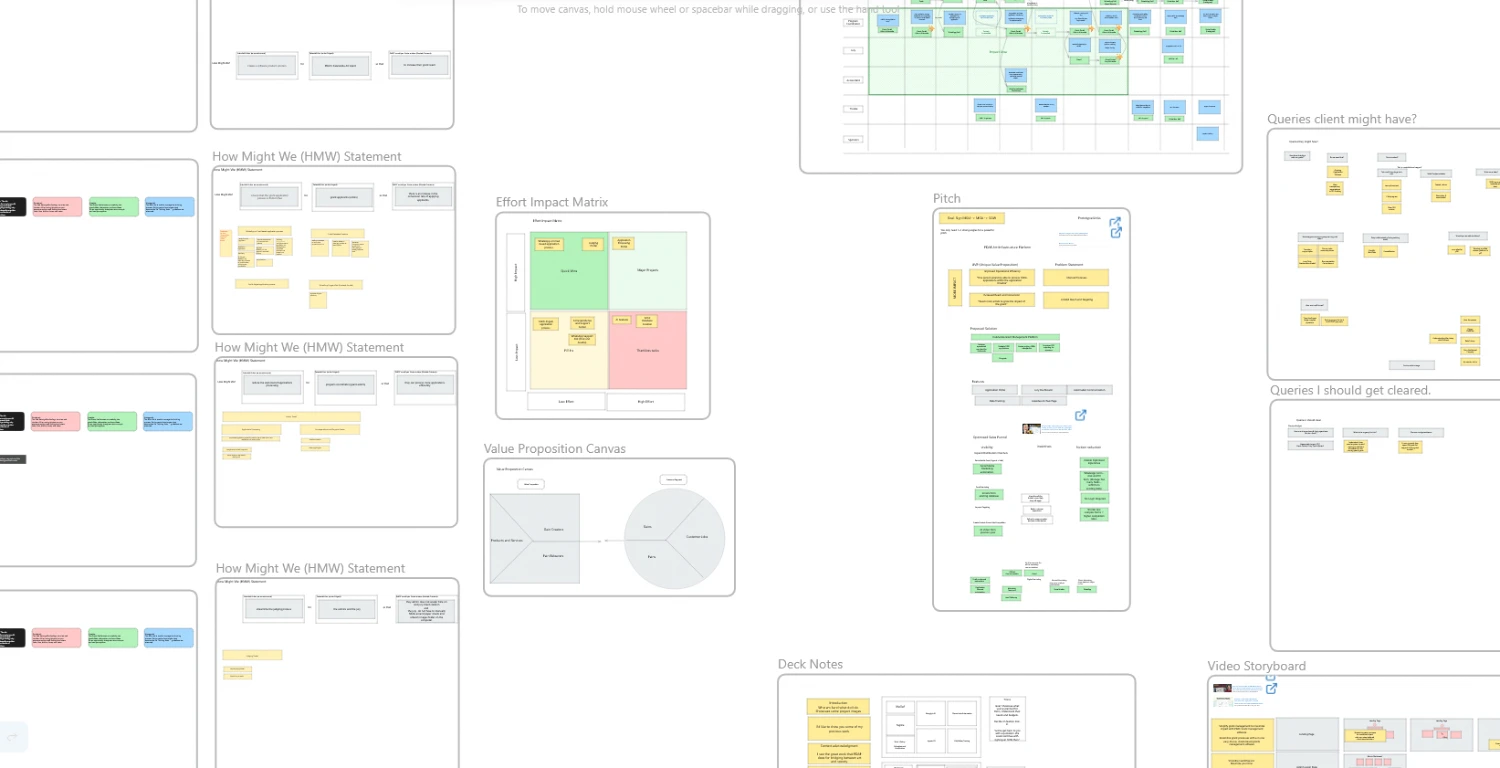
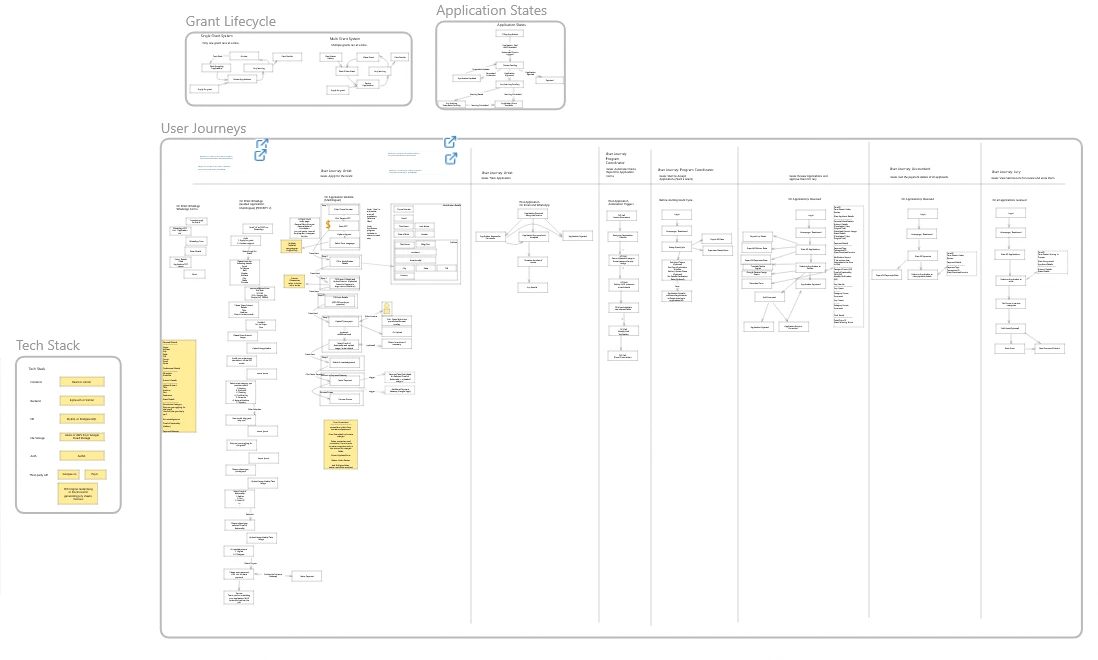
An exhaustive UX research phase was conducted to address the distinct limitations of the artist applicant pool. The entire application ecosystem was wireframed onto physical whiteboards, mapping out a highly simplified, intuitive user journey. This design removed complex jargon, reduced form steps, and optimized layouts specifically for easy navigation by users with lower digital literacy.
Outcome
The rapid delivery of a complete video demonstration of the interactive prototype allowed foundation trustees to easily visualize the final system architecture, moving the pitch into active development planning. The proposed platform architecture offered a highly cost-effective engineering blueprint. Once fully deployed, the system is designed to drastically scale the foundation’s annual applicant capacity while freeing internal administrators from manual paperwork.