
Context
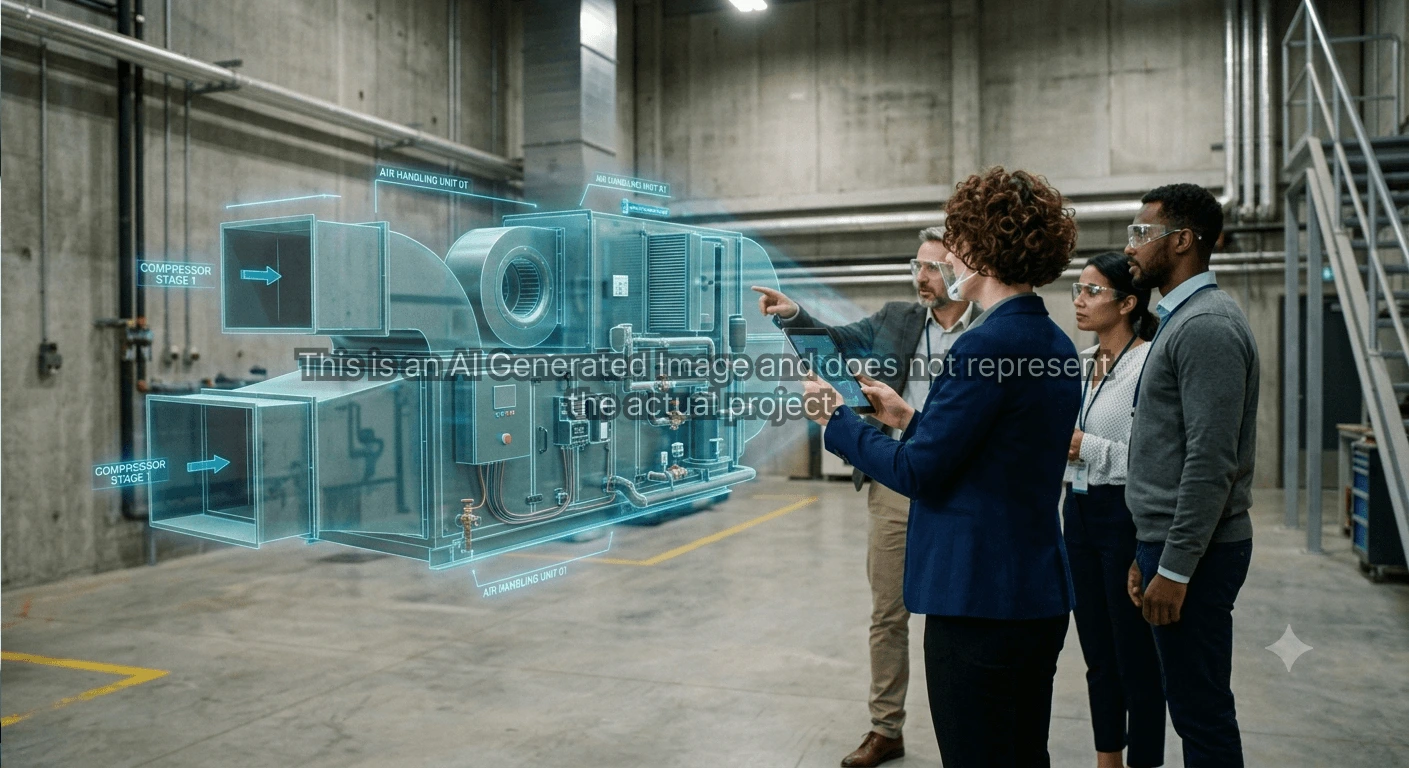
As part of a larger manufacturing offering to showcase at the regional innovation center, the company sought to develop a high-value XR solutions for the heavy machinery industry. A product was needed to fill a critical pain point for B2B field sales agents marketing highly complex, heavy industrial machinery, enabling agents to meet prospects directly on location, configure massive heavy machinery in real time, calculate instantaneous pricing quotes, and instantly visualize the exact physical footprint of the customized machinery within their actual site.
Requirement
Required was a native iPad solution that demonstrated how sales agents could directly on-site, configure massive heavy machinery in real time, instantly visualize the exact physical layout and footprint while calculate instantaneous pricing quotes. I was brought onboard to with the ownership of the project and tasked to conduct domain specific research, conceptualize the end-to-end user journeys, wireframe responsive interfaces, and collaborate with the art and engineering teams to get the project executed.
Solution
Industrial heavy machinery systems are highly engineered with specifications that are generally opaque to non SMEs. To build an effective software solution, an extensive deep-dive was conducted into manufacturing technical sheets, performance variables, and engineering blueprints. This research helped map out the exact purchasing considerations of buyers—focusing heavily on how changes in machine configuration directly dictate the physical size and internal component layouts of the unit.
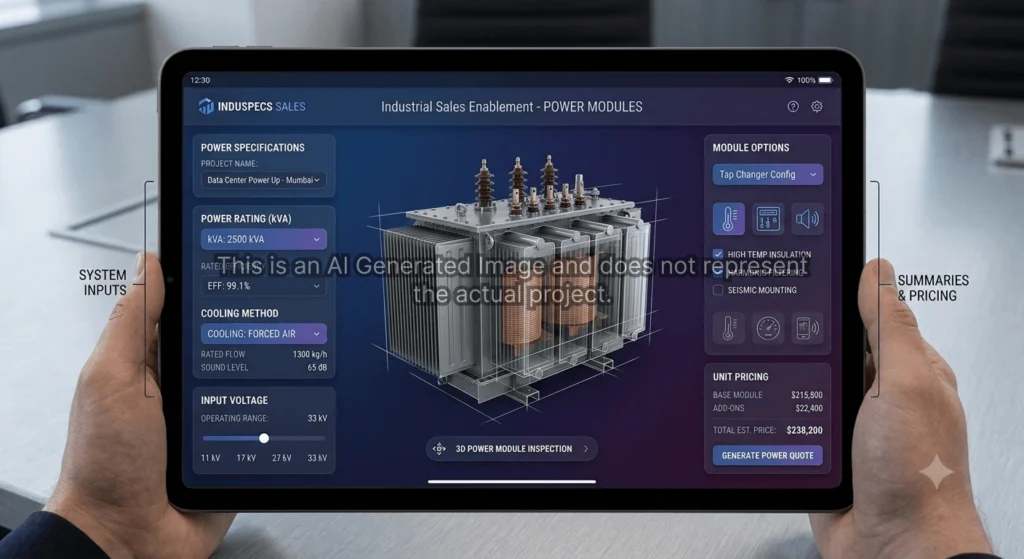
Operating tablet AR in active industrial environments presented clear physical challenges. To showcase the UX and ergonomic consideration for such a project such as hazard from tripping or dropping devices while walking through the site, strict UI guardrails were implemented. The user journey was explicitly divided into static configuration and fixed-point visualization toggles. Furthermore, considering dual-handed tablet ergonomics, entire interface were mapped onto left- or right-side thumb zones, allowing seamless single-thumb adjustments while maintaining a secure, two-handed grip on the hardware.
Looking beyond the 2D CPQ implementations for industrial applications, inspiration was drawn from high-end 3D consumer product configuration tools. Smooth, high-fidelity color gradients and responsive 3D visual feedback models, making complex machinery configurations feel intuitive and visually engaging reducing cognitive load and focusing at the job at hand.
A 3D prototype helped immensely in enhanced communicating technical spatial designs and guidelines, which reduced the entire communicating time to fraction as compared to 2D prototyping. Leveraging the domain research conducted early on enabled translation of detailed technical blueprints into actionable tasks for the 3D art team and the development team for defining clear logic gates for which components needed to dynamically scale or swap when a sales agent adjusted specific configuration values, ensuring the spatial models remained visually and logically accurate.
Outcome
Successfully translating complex, deeply technical brief into a high-value immersive product, the solution provided the BU leadership with a functional showcase to demonstrate LTIMindtree’s capabilities to multi-national industrial clients across industrial sectors while earning the project a spot as a live demonstration piece at the regional executive experience center.